Perpetuate Peace, Good Will, Understanding among Nations – Veterans Day

Veterans Day Flag

It’s my privilege to introduce scientist and author J.J. Brown, PhD. Dr. Brown shared an insightful message promoting peace, goodwill and understanding on Veterans Day. I’m honored to share her story with you today.

Perpetuate Peace, Good Will, Understanding among Nations – Veterans Day

Posted on November 10, 2011 by J.J.Brown Author1 Comment

I ask myself the question every year on Veterans Day. What does it mean to me that my father had been a soldier in World War II? It is a day of reflection for me. But really, I ask the question not only on that day, but on Memorial Day and many other days in between I think. I ask what that experience did to him and what it did in turn, to us, his family. With over 2 million having served in the most recent wars in Iraq and Afghanistan, so many more peoples’ fathers will have been soldiers in the coming years, and now mothers too.

What it meant for me growing up was reflected in what we didn’t do, and what we did do.

What we didn’t do: go to parades and go shopping.

No, parades were not for us when I was growing up on those government holidays. If a parade was even mentioned in my house, it led to a long discussion about the people who survived the World War II in our community and why, and those who didn’t—a very long list—and how. No shopping was planned at special sales organized to take advantage of the free time. Shopping on these days was seen as a kind of obscenity.

What we did do: reflect, and listen to my father’s stories—some true and some hypothetical.

We got to hear what he thought about Veterans Day, Memorial Day, war, death, and the experiences of being a soldier and being the brother of a soldier killed in the war. We got to listen to how it felt to be the surviving son in a family who lost a son in the war. When we were very young, we might ask if he had actually killed a person, and that question would always remain unanswered. He would say, “You can’t kill a stranger, someone you don’t know, whose family you don’t know”. I never quite understood what that meant. Some days, adding a wrapper of horror to the day off from public school, we got to hear what it was like for him in the army, walking through the cities ofJapanjust after theUSdropped the atomic bombs there. So for me, these special government holidays were heavy, oppressive days of trying to understand the world through his lens, focused by his pain and his remorse.

This is one of his stories heard when I was a child.

Dad: Sometimes truth isn’t so important, not like friendship, or loyalty.

Mom: But you shouldn’t lie.

Dad: Sometimes.

Mom: All the time. The children are listening to you, please. I don’t want them to lie.

Dad: So what do you do, if you are in a room in your house during an occupation? In the corner of the room is a pile of blankets. Under the blankets is a man hiding from soldiers. The soldiers come stomping through your house with their guns and bayonets out, and they ask you if you have seen a man. What do you say?

Mom: Not a fair question.

Dad: Do you tell the truth? Do you lie? Do you say, well sir, yes, right there under that pile of blankets is a man?

The children (us): Laughter.

Mom, angry: Please.

Dad: Let’s say that you tell the truth. And then what do the soldiers do next? They go over to the pile of blankets and kill the man. They shoot the pile of blankets and they run their bayonets through it. That’s what happens.

Mom: Really, you don’t have to describe things like that.

Dad. I’m just saying, sometimes telling the truth isn’t that important. Sometimes you have to not speak at all. And sometimes you have to lie. Sometimes, telling a lie is the right thing to do. You might have to protect someone one day.

Mom: Great, in front of the children. Wonderful. You shouldn’t lie, in most circumstances they are likely to be in.

Dad: It could happen. A person has to think about the consequence, that’s all I’m saying, the consequence of the words. It’s not so important that it be true, or that you shouldn’t lie.  I’ll tell you what you shouldn’t do. You shouldn’t kill. And you shouldn’t get someone else killed either.

The children (us): Speechless.

He may have gotten this story from experience; he may have gotten it from another storyteller as he was very fond of reading stories and retelling them. His stories burned in my memory but they also taught me to question what was right, and to think about how each of us were connected to those around us by each thing we said and did. I miss his storytelling, but I do repeat many of the stories in my head.

A little history with that memory:

From:
http://www.va.gov/opa/vetsday/vetdayhistory.asp

“Whereas the 11th of November 1918, marked the cessation of the most destructive, sanguinary, and far reaching war in human annals and the
resumption by the people of the United States of peaceful relations with other
nations, which we hope may never again be severed, and

Whereas it is fitting that the recurring anniversary of this date should be commemorated with thanksgiving and prayer and exercises designed to perpetuate peace through good will and mutual understanding between nations; and

Whereas the legislatures of twenty-seven of our States have already declared November 11 to be a legal holiday: Therefore be it Resolved by the Senate (the House of Representatives concurring), that the President of the United States is requested to issue a proclamation calling upon the officials to display the flag of the United States on all Government buildings on November 11 and inviting the people of the United States to observe the day in schools and churches, or other suitable places, with appropriate ceremonies of friendly relations with all other peoples.

An Act (52 Stat. 351; 5U. S.Code, Sec. 87a) approved May 13, 1938, made the 11th of November in each year a legal holiday.”

I especially like the part about “friendly relations with all other peoples”. If I had to answer–and the answer is always evolving—of what it means to me that my father had been a soldier, it is that I want to avoid violence and war. I want friendly relations with people. He taught me that I have to be responsible for what I say and do, and consider the effect on the lives of people all around me. That’s it, because he was a soldier, I became obsessed with moral responsibility.

I encourage you to subscribe to J.J. Brown’s website: http://jjbrownauthor.com/2011/11/10/perpetuate-peace-good-will-understanding-among-nations-veterans-day/


7 Comments

Filed under Uncategorized

Guest Interview – Author of The World According to August, on Autism

To my readers, I am honored to introduce you to Sandy Westendorf,

Author of The World According to August

author of The World According to August – One Good Friend.

Sandy’s book inspired me to write Poem for an autistic child and has agreed to answer questions related to comments from the introduction of her book.

Interview questions

Your book, “The World According to August” touched me deeply. You give us a deeply personal, yet insightful picture of a child with autism; how he and they are similar in many ways and yet different, as well. Each numbered item is a quote from your book. Next is my question in italics.

Would you care to comment on these statements from the introduction of your book?

  1. Every child is unique; the extent to which they are affected is also individual. If you are not living with autism, it is easy to miss the child and only see the diagnosis. The book was written in an attempt to demonstrate, although outwardly, these children may appear different; but inside—where it counts—they are the same as you or me. Children with autism love, have an ego, feelings which can be hurt, a sense of humour, and even a mischievous side.What would you like to add to these observations?

It does not matter whether you are part of the mainstream or not.  We all seek attachments. Attachment is vital to our health.  Humankind tends to observe the obvious first, I’m no different. What is obvious about autism? Behaviors – mostly. What is missed? The person, the one who is seeking attachments, trying to find a way to belong and fit into our society. Autism is not contagious; your children will not catch it from a play-date with a child who has special needs.  In fact, mainstream children who engage others with disabilities exhibit more tolerance, confidence and appear to have deeper connections with their peers as a result.

I observed the mainstream public had many misconceptions about children with autism. I wanted the world to know – they have the same feelings, dreams and disappointments as us all.  Like most of us, people with autism also appreciate a good joke.

2. What you will find in these pages is a humorous and occasionally touching account of how a child with autism views the world.

On a lighter note, please comment on the emotional side of working with and parenting an autistic child.

Let’s see, the rewards are harder won, therefore; the moment you see something finally click for your child – it is like winning the lottery.  You make a BIG deal about their hard-earned accomplishment.  You start to see everything in a different light and tend not take things for granted.  You pay attention to the little things

This is by no means a portrayal of how all autistic children experience the world, as every child is unique.

Would it be fair to suggest that one of your goals is to encourage those who have misconceptions about autistic children to reconsider their positions and to look for meaning in the lives of these valued members of society?

Yes, absolutely. Try not to place a ‘cookie cutter’ label on them. In the interest of simplicity, many individuals with autism are labeled ‘low, medium or high functioning’.  Most people then have a general sense of the individual’s abilities.  What the general populous might not realize is, there are splinter skills within these categories.  You may have someone who is considered ‘high-functioning’ but cannot read or they struggle with math.  My son for example, is considered ‘low-functioning’ because his language deficits are pronounced. However, this is a child who did not speak until he was four years old, but he taught himself to read at the age of three!  We had him tested – no one believed us.  He is also a little math whiz, but struggles with social interactions.  He generalizes faster than most. This means once he has grasped the foundation of a new concept, he can generalize it across anything and he is off and running with it.  These are a few of his splinter skills, areas where he is above the curve.

I guess what I am trying to say, in a round-about way is- you don’t know what someone is capable of, or what you can learn from them until you give them a chance. You may be surprised.

Would you like to add any other comments?

I want to thank you for giving me the opportunity to stand on my soap-box and spread the message about people with disabilities. Many do not have a voice of their own. It is up to those of us, who love and care for them, to give them that voice. Parents should know it is okay to advocate for your child, special needs or mainstream. Encourage connections with people with different abilities – it will make all the difference – to you and to them. Eight months after I had finished writing the story and it was in the hands of my book designer, I came across the following link: http://www.wretchesandjabberers.org/screening2.php I was delighted to see other like-minded people. The short clips on the link show two men with autism trying to dispel many of the misconceptions of developmental disabilities. Their message was exactly what mine is – inside we are all the same.

6 Comments

Filed under Author Interview, Autism

Poem for an Autistic Child

A Tribute to August

from “The World According to August —

One Good Friend”
by Sandy Westendorf

To soar on wings of eagles

to glide along the glade

to bounce and jump and whirl and twirl

to dream and search and sway.

He has so much in common

with you and me you see —

a bright and charming sweet young boy

who senses all with clarity.

To hear, to see and touch and smell,

he takes all in so well,

his self expression is unique

his feelings hard to sell.

We might whisper, he might yell

but one can never tell.

He likes himself and folks like him

and that works out quite well.

August has needs and we have ours,

life comes with give and take ―

love and comfort, peace and joy

needs all share, so we partake.

A smile, a doubt, a look askance

a wave, a nod, a sigh —

He needs hugs and love at times,

same as you and I.

He gazes on the sights nearby,

is stirred by beauty there.

A swan takes flight, a songbird sings,

if only he could fly.

Unspoken words may bite his tongue,

but thoughts within belie.

A word from Mom, a smile from Sis

unspoken things give him answers to why.

Show him love and friendship now

his joy you’ll never miss.

  Don’t ever leave just stay nearby,
he just might make you cry.

August is a special child

and August needs a friend.

August is a special child

And August is my friend.

a poem by Rich Weatherly, October 7, 2011

For more information about autism and “The World According to August – One Good Friend” by Sandy Westendorf  refer to http://purplebirch.com/books.html .

Sandy managed a team of behavioral specialists and is the mother of an autistic child. According to Sandy:

Every child is unique; the extent to which they are affected is also individual. If you are not living with autism, it is easy to miss the child and only see the diagnosis.The aim of this book is not to speak to autism as a disorder or to define it; there are many excellent references which address those specific topics…

The book was written in an attempt to demonstrate, although outwardly,
these children may appear different; but inside—where it counts—they
are the same as you or me.Children with autism love, have an ego,
feelings which can be hurt, a sense of humour, and even a mischievous side.

I heartily encourage you to support research into autism by purchasing this book.  A percentage of the proceeds will be donated equally to support Canadian-American Research Consortium (Autism Research) and the International Society for Autism Research.

25 Comments

Filed under Understanding Autism

Poetic Potpourri

Poetic Potpourri selections by Rich Weatherly

via Poetic Potpourri.

Leave a comment

Filed under Poetry

Three Forks Families Blog – a Rail Line Arrives in Fort Worth, Texas

Photo by Rich Weatherly

Fort Worth welcomed the long awaited arrival steam power on July 19th, 1876. It was an occasion filled with  joyous celebration. Residents of Fort Worth had long eyed their neighbors in Eagle Ford with jealous envy.   Eagle Ford just west of Dallas had been the last stop for the Texas and Pacific Railroad.  Fort Worth was just a sleepy little town 35 miles west of Dallas, its nickname –  Panther City. As the story goes one morning, a citizen pointed to some marks on a business street and declared, “That’s where a panther slept last night.” Fort Worth leaders made determined efforts to reverse that image. A rail line would open the city to growth and economic expansion.  Getting the rail line  was a race against the clock.

According to Fort Worth records, city leaders worked with the  T&P to hire Welshman Morgan Jones to complete the line before the legislature adjourned. Otherwise, the T&P would have lost the state  land grant. Work continued day and night while  little more than a mile of track was laid per day. A holiday spirit filled the town when Jones’s line finally reached Fort Worth on time. The success made the Welshman a local hero and marked the beginning of a new era of growth for Fort Worth.

The Texas and Pacific Railway had successfully completed the journey to Fort Worth opening a new era of growth and development.  The 2010 Census showed Fort Worth’s growth outpacing that of Dallas after decades of the opposite being true.  History has a way of repeating itself.

Bibliography

City of Fort Worth historical records
http://us.mg201.mail.yahoo.com/dc/launch?.partner=sbc&.gx=1&.rand=278ajofbc1pnb

Cited in part from Texas State Historical Association, Texas Day by Day http://www.tshaonline.org/day-by-day/30667

A Race Against Time: The Railroad Comes To “Pantherville”

The Texas and Pacific Railway (T&P) was being constructed westward across the state of Texas and, in anticipation of the railroad’s arrival, Fort Worth boomed.

Capt. B. B. Paddock, a Civil War veteran, had a lot to do with that “boom.” In 1872, he became editor of the Fort Worth Democrat. Boundless in his enthusiasm for Fort Worth’s future, the editor published a map as part of the paper’s masthead showing nine railroads entering Fort Worth — this at a time when the nearest line was some 30 miles away.

Editors in other towns jested about Paddock’s “tarantula map.”

In the autumn of 1872, the T&P had been built to Eagle Ford, six miles west of Dallas.

2 Comments

Filed under Rail Roads

Thrills at the Esplanade Cinema

DSCI1359 Regal movie theater in Nashville

Image by bresslau via Flickr

Thrills at the Esplanade Cinema

Featuring an Usher, Mr. Machen and Faithful Friends

A Short Story

By

Rich Weatherly

The once rural community of Huntsford changed after World War II. In recent years, large segments of the population migrated from farms to the cities. Roads and highways spread like tendrils across the lush green prairies. Grazing land and farm country morphed into housing developments. The economic boom padded the pockets of young baby boomers. Their loose change fueled the coffers of the Esplanade Cinema like oil from a pipeline. I worked at the Esplanade.

My walk to work took me across fields and pastures. Those walks reminded me of the farm where I lived and worked only a year earlier. In 1960 I cut and baled hay, herded cattle and did farm chores. Walks across fields on the edges of Huntsford brought back simple pleasures as the gentle breezes carried the sweet smell of fresh cut hay or the sounds of cattle lowing across the few remaining meadows. Yet this was a time and place for transitions.

The end of my walk brought me to the Esplanade Cinema. It anchored the west end of our first shopping center. King Boy’s Burgers was right on my way to the Esplanade; across the street from the theater. The proximity created a mutual attraction, since both businesses benefited from the influx of customers. My mouth watered in anticipation of grilled burgers each time I passed by. I wonder how many folks drove to King Boy’s for burgers only to be lured into an evening of fantasy at the theater.

At the Esplanade, good friends and a fair boss offered camaraderie and fulfillment. The theater was a wonderful place to work – close to home near places to meet and greet. You should have seen the place at night. It was like magic. Glow of neon lit the marquee with brilliant colors; reds and yellows danced across glistening panels while a neon star crowned the very top. The star appeared to dance when illuminated – rising, falling and collapsing on itself between oscillations, like a rolling wave on the open sea; a hypnotic illusion created by masters of lighting. The cycle repeated until the theater shutdown for the night.

The white marquee advertised the current attraction in letters we mounted one at a time – it took skill and patience to get the letters exactly where they belonged; each one placed on a long pole, lifted to the ledge and dropped in a groove. We nudged and adjusted the letter tiles into a secure spot where they remained until the next movie came along. Imagine posting a title like: The Pit and the Pendulum, featuring Roger Corman and Vincent Price.

I entered the theater through one of four sets of double-doors. As I arrived one day my boss, Mr. Machen announced some errands for me to take care of across town. He took notice at my surprise when he gave me the keys to his 1959 T-Bird. My assignment – transport records to another theater and deliver a briefcase full of cash to the bank. After I finished the errand he gave me another one – take a purchase order to the Palace Theater and pay for seats their owner removed to make room for new ones. Esplanade could do without ‘designer’ seats. These older ones met the Mr. Machen’s approval without exception. His practicality and frugality always on display.

The curtain rose every night like clockwork. It took a lot of hard work to get the Esplanade Cinema ready for the next show. Mr. Machen would hire a cleanup crew to take care of the really disgusting work: toilets, heavy vacuuming. People spilled drinks, dropped popcorn and candy wrappers anywhere: on the floor, in the seats, between the seats. Gum stuck to the bottom of seats like lumpy tacks. Don’t ever check to see. Trust me. You don’t want to find out.

The cleanup crew didn’t mess around. Their heavy-duty vacuums and shampoo equipment attacked the maroon and black speckled Berber carpet extending from the entry to the dais under the movie screen. After the cleanup, the theater crew made a final inspection walking the aisles and checking between seats to ensure nothing was amiss spot cleaning as we went. Craig and I were ushers. Karen and Roberta worked as greeters and in concessions.

The last few hours before opening changed priorities. Ticket sales were number one. No sales, no job. Jill, our ticket agent, worked the booth selling tickets. If she needed a break, the rest of us pitched in.

Priority number two. Get the concessions area ready for business when our customers’ arrived. Several things occurred simultaneously; safety always paramount. We started by making popcorn because heating up the popcorn machine took time. Lift the kettle lid and add the kernels to boiling oil. This required extra care. Hot oil can cause third degree burns. The sound of the stainless steel kettle jiggling in clear view excited and mesmerized customers, delivering the intended effect. We passed them boxes of luscious buttery popcorn, they handed over their cash. If more persuasion was needed, the sights, sounds and aroma did the rest to keep the customers coming. While the popcorn popped, the soda machine operator poured the soft drinks – ice in a cup, pull down a lever, fill them with syrup and add carbonated water. Getting the fresh popcorn and drinks out on the service counter meant the concessions area was ready for business.

While Craig and I helped the girls prepare the concessions area our projectionist, Sid arrived through a side entrance with heavy cases of movie reels. He dashed up the balcony stairs and through a side door to the projection booth. Viewing ports next to the projection lens provided a clear view of the entire theater.

Ticket sales escalated as curtain time drew near. Customers waited in two lines; one to purchase tickets, the other to get in. Crowds were often restless, always eager to rush the doors for the best seats. No one wanted to get in their way. A pushy mob is dangerous. Unlatching the door was tricky, the only barrier to a stampeding hoard. One instant after the doors opened, the Esplanade’s aura resembled a midway of yelling, pushing thrill seekers. Parents of the teens dropped them off wanting a break and time to themselves. Things settled into a normal routine once the mob became a crowd again.

As one of the ushers, my job required more than escorting guests to their seats. Besides clearing obstructions from the aisles, looking for items of clothing, money, wallets people may have dropped in the dark, we provided a broad array of services on request. During my rounds, I directed a flashlight beam where needed, sometimes helping those with night blindness or pointing out objects someone might trip over. Ushers are charged with maintaining order. Most of the audience is young and must be reminded they are not in a school yard. We spent more time controlling unruly kids than we should have because many would not cooperate. Rebels needed to be escorted from the auditorium. One lad when asked to quiet down one refused. I escorted him out the way my mom would have; by thumb and forefinger. Those two digits work rather well when clamped to the offender’s ear. It’s amazing how cooperative he became when in my grasp. I took him straight out the door and told him not to come back.

By contrast, I greeted an elderly woman waiting at the back of the auditorium and helped her to a seat. She wore a pleasing fragrance of expensive cologne and fresh body powder. When I greeted her she politely requested an aisle seat. I offered her my arm and led her to a seat, shining the flashlight on the floor, giving her time to sit and get settled.

Glancing toward the balcony, I noticed a young woman leaning back in her seat, ankles elevated and pink penny-loafers crisscrossed on the armrest in front of her. When she realized I noticed her, she became defiant. I looked away for a moment hoping she would take her feet off the armrest. Still no response. She knew her actions violated theater rules because of the signs posted everywhere. Her behavior distracted other guests and her actions were damaging the furniture.

I felt the situation reaching a flash point. She remained defiant. Even her outfit screamed anarchy: gold and black striped sweater, patent leather belt, pink miniskirt. Approaching her, I spoke clearly. “Please place your feet on the floor, Miss. You know the rules.” A primal stare was her answer. I stepped back as her rebellion escalated into rage. In an instant, the vixen bared her teeth, cheeks flushed; her eyes ablaze and nostrils flared. Her knuckles turned white as she gripped the armrest berating my efforts to reason with her. I left in frustration and retreated down the steps away from her childish display – let her gloat, convinced she’d won the day.

I fought hard to control the adrenaline surging through my body. Down in the main auditorium, I composed myself, considering my next course of action. A moment later I called Craig, the other usher over and directed his attention to the girl. I asked him to keep an eye on the girl while I informed Mr. Machen of the situation. A few days earlier he provided instructions on actions to take when a situation got out of hand. I knocked on his office door. When he asked me to come in I briefed him on the problem. He asked me to keep him informed. Still trying to calm my nerves, I continued to monitor the balcony when the situation went from bad to worse.

The vixen’s boyfriend arrived with an entourage of six other thugs, with their jet black hair slicked back, black leather jackets and red shirts with collars turned up. They resembled James Dean. Their jeans were all cinched by studded leather belts. The leader wore black boots with silver tipped toes. West Side Story meets Gentleman’s Quarterly in the early ‘60s. The guy swaggered toward me, an usher with a crew cut. Guido. Surely it was some such name.

He closed in, his snarling, menacing face staring under a twisted brow; his pursed lips twisting into a sneer. The gang of six formed a semi-circle behind me curving from left to right. Rigid robots awaiting orders to pounce, shifting like snakes to intimidate a clean-cut kid in their way.

“Whatta __ ya doin’ getting fresh wit my girl, you fuzzy headed stooge. You tryin’ to be friendly or somethin’, usher boy?”

I locked my eyes on his. “Are you referring to a certain young woman in the balcony, sir? I asked her to obey the theater rules and place her feet on the floor. Her legs were propped up on the furniture.”

“That’s not what she told me! You better apologize for getting fresh wit my fiancée!”

I drew back a little. “I don’t know what you’re talking about. I’m only doing my job.”

Guido stomped, jerked his shoulders and whipped out a shiny switch blade slicing the air as he flicked the tip from side-to-side inches from my face; the point inching closer. He twisted his wrist and the blade rolled and twitched from side to side. “She said you made a pass at her!”

“I did not. Let’s try to calm down for a minute and talk about what really happened.”

I was nearly at wits end when, Mr. Machen called out to Guido. “Put the knife down and step away!” The boss then opened his jacket where a 1911 Colt 45 ACP semi-automatic pistol gleamed in his shoulder holster. About the same time, sirens screamed in the distance. Guido and his gang turned pale at the sudden reversal.

Watching the scene unfold below, vixen bolted down the stairs on a determined trajectory to the west EXIT sign. Guido and his cronies fled behind her into the arms of the police. We never saw Guido, his gang or the vixen again.

A short time later Mr. Machen told me Sid noticed the threat, called him and notified the police. I owed Sid and Mr. Machen a debt of gratitude; they saved my bacon. I tried to relax but chills ran up my spine. I said, “Mr. Machen, thank for your help. I don’t know what might have happened otherwise.”

“Let’s go to my office,” he said.

A smell fresh tobacco and Old Spice shaving lotion filled the office. These odors permeated the little room. The scent of his wife’s perfume lingered from an earlier visit. After I sat down, he leaned forward. “I can’t say how sorry I am this happened on your watch, kid. I was a Golden Gloves boxer. And I’m no stranger to trouble.” After giving me time for his comment to sink in, he continued. “I always stay prepared. Try not to dwell on this incident otherwise it’ll drive you nuts.”

“Yes, sir.”

“The movie’s underway and it’s getting late. How about you call it a night? You are too shook up to keep on working.”

I thanked him and headed home, tired and in shock thinking on what might have been.

______________________________________________________________________

I continued working at the Esplanade, as did my friends – Craig the other usher, Karen, Roberta who worked concessions, and Jill our ticket agent. Sid, our projectionist along and Mr. Machen, may have saved my life. I stayed on until June of 1963. Events of the night gave me enough sobering reality to last a lifetime – all because one girl and her guy were bent on a life of rebellion.

I gave Mr. Machen notice letting him know of my active duty commitment with the Navy. I never saw my old boss again but will always have fond memories of the man and the Esplanade Cinema. He ran a tight ship, hired good people and took care of them.

Epilogue

The couple in black – Guido and his vixen; my hope is they turned their backs on their rebellious life style and pursued a better life. Some rebels eventually do, becoming pillars of the community. Others go from bad to worse. Some go to prison but some die because they never learned.

A month after graduating high school I packed up and hopped a Sante Fe passenger train, eventually arriving at the Great Lakes Naval Training Center in North Chicago. There I worked and studied. Six months later after graduating from electronics school I headed home. I was getting my medical records at the base infirmary on November 22, 1963 when terrible news blasted over the loud-speaker– “President John F. Kennedy has been shot in Dallas.” A hush fell over the room, everyone in stunned disbelief. Confusion reigned. All hung their heads in sadness and many said prayers as we shuffled toward the exit, each continuing on to our respective destinations.

The train ride home was a long one. I slept most of the trip, too depressed to do much else. Two days later the train arrived in Dallas. Something caused a delay as the train slowed to enter the station.  Later we learned the Lee Harvey Oswald shooting took place in the county jail near Dealy Plaza where President Kennedy was shot on Friday. A few months later my ship patrolled Pacific islands like Iwo Jima, Saipan, Tinian and Truk Atoll where only twenty years earlier US forces fought bloody battles against the Japanese. Not quite a year later we patrolled the shore line and estuaries of South Vietnam; part of the blockade known as Operation Market Time. The US was up to its ears in another bloody war. The Vietnam War lasted most of another decade. I lost friends and comrades at arms in Vietnam. Their memories still haunt me. Looking back, my problem at the Esplanade added another check mark on my list of painful lessons and another cause for reflection.

Those were hard times for me. In the span of three years of my life I lived through the following:  an assault at the point of a knife; lost my dad, a survivor of the attack on Pearl Harbor, retraced World War II battles and engaged an enemy at war. My outlook on life took on new meaning as a result.

If you have a similar story or other contribution please leave a comment.

I owe my editor and friend Mary McReynolds a debt of gratitude for her unselfish and helpful recommendations. You can view her work at: http://maryhicksmcreynolds.com/category/published-books

This is a work of fiction. Any resemblance to real or fictional characters is purely coincidental.

© 2011 Richard L Weatherly

16 Comments

Filed under Cinema, Thriller

Laugh’s are on me – this just happened

Door Knob with Lock USA

Image via Wikipedia

Today, 2:30 PM North Texas on July 12th

I’m dressed for comfort: t-shirt, swim trunks & barefoot.

Dog wants to frolic. I step out with her.
Got my iPhone & Kindle w/ a cold, icy drink. Im basking in my natural sauna taking it easy.

Only 98 degrees out.

Time to cool off.
I reach for the door knob, yikes!
Locked out no key – not good.

How it happened.
We had just changed the locks. Wife’s been saying the new locks have a problem. I said, I always carry a key.

Here’s what’s different. This door knob opens from the inside even when locked. I knew that but this
impromptu event set me up for failure.

Saved by my iPhone.
Called daughter who bailed me out. Cool and comfy again just minutes later. Wearing a key from now on.

Hope you got a chuckle out of this true story.

2 Comments

July 12, 2011 · 3:03 pm

Three Forks Families Blog at WordPress – John Neely Bryan

In the middle of the nineteenth century my ancestor Isaac ‘Ike’ Story traveled to north Texas with other families from southern Illinois. Prior to that Sam Houston’s Treaty with the Indian Tribes of North Texas at Bird’s Fort had paved the way for settlement of the area. This

Ike Story, Pioneer, entrepreneur and postmaster

area of lush prairies and rivers also had an abundance of timber teaming with game. These features created a natural draw for early settlement.

Trails were being blazed into three forks. One of the earliest settlers and entrepreneurs was John Neely Bryan.

The Texas State Historical Association‘s article on this pioneer gives us an in-depth look into the life of the founder of what is now Dallas, Texas. Their article continues his story.

John Neely Bryan, Indian trader, farmer, lawyer, and founder of Dallas, son of James and Elizabeth (Neely) Bryan, was born on December 24, 1810, in Fayetteville, Tennessee. He attended Fayetteville Military Academy and after reading law was admitted to the Tennessee bar. Around 1833 he moved to Arkansas, where he became an Indian trader. According to some sources, he and a partner laid out the town of Van Buren, Arkansas. Bryan made his first trip to the future site of Dallas, Texas, in 1839. He returned to Van Buren temporarily to settle his affairs, and in November 1841 he was back in Texas. He settled on the east bank of the Trinity River, not far from the present location of downtown Dallas. In the spring of 1842 he persuaded several families who had settled at Bird’s Fort to join him. On February 26, 1843, Bryan married Margaret Beeman, a daughter of one of these families. The couple had five children. Bryan served as postmaster in the Republic of Texas and operated a ferry across the Trinity where Commerce Street crosses the river today. In 1844 he persuaded J. P. Dumas to survey and plat the site of Dallas and possibly helped him with the work. Bryan was instrumental in the organizing of Dallas County in 1846 and in the choosing of Dallas as its county seat in August 1850. When Dallas became the county seat, Bryan donated the land for the courthouse.

He joined the California gold rush in 1849 but returned to Dallas within a year. In January 1853 he was a delegate to the state Democratic convention. In 1855, after shooting a man who had insulted his wife, Bryan fled to the Creek Nation. The man recovered, but although Bryan was surely informed of that fact within months of his flight, he did not return to his family in Dallas for about six years. He traveled to Colorado and California, apparently looking for gold, and returned to Dallas in 1860 or early 1861. He joined Col. Nicholas H. Darnell‘s Eighteenth Texas Cavalry regiment in the winter of 1861 and served with that unit until late 1862, when he was discharged because of his age and poor health. When he returned to Dallas in 1862, he became active once more in community affairs. In 1863 he was a trustee for Dallas Male and Female Academy. In 1866 he was prominent in efforts to aid victims of the flood that occurred that year. He also chaired a citizens’ meeting that pressed for the completion of the Houston and Texas Central Railway and presided at a rally seeking full political rights for all ex-Confederates. In 1871–72 he was one of the directors of the Dallas Bridge Company, the company that built the first iron bridge across the Trinity. He was also on the platform at the welcoming ceremonies for the Houston and Texas Central train when it pulled into town in mid-July 1872.

By 1874 Bryan’s mind was clearly impaired. He was admitted to the State Lunatic Asylum (later the Austin State Hospital ) in February 1877, and he died there on September 8 of that year. He was a Presbyterian.

For more official information about this engagement please refer to Bibliography

John William Rogers, The Lusty Texans of Dallas (New York: Dutton, 1951; enlarged ed. 1960; expanded ed., Dallas: Cokesbury Book Store, 1965). Lucy C. Trent, John Neely Bryan (Dallas: Tardy, 1936).

Cecil Harper, Jr., “BRYAN, JOHN NEELY,” Handbook of Texas Online (http://www.tshaonline.org/handbook/online/articles/fbran), accessed January 14, 2012. Published by the Texas State Historical Association.:

2 Comments

July 8, 2011 · 10:04 am

Drug Abuse and Distorted Perceptions based on “Pop-intellectual myths”

Cover of "On Writing:  A Memoir of the Cr...

Cover of On Writing: A Memoir of the Craft

There is a common misconception in our culture that creative people need a little extra help to be ‘creative’. In the passage below Stephen King debunks that idea. He speaks as one who has been there. Did he need ‘drinking and drugging’ to write well? He answers that question below:

In the middle of the 1980s Stephen King’s life was spiraling out of control, his body saturated with alcohol and drugs. After years of self-denial and an ultimatum by his wife and family, King writes in his book, On Writing: A Memoir of the Craft


“The idea that creative endeavor and mind-altering substances are entwined is one of the great pop-intellectual myths of our time.”

“I was afraid that I wouldn’t be able to work anymore if I quit drinking and drugging, but I decided (again, so far as I was able to decide anything in my distraught and depressed state of mind) that I would trade writing for staying married and watching the kids grow up. If it came to that. It didn’t, of course. The idea that creative endeavor and mind-altering substances are entwined is one of the great pop-intellectual myths of our time. The four twentieth-century writers whose work is most responsible for it are probably Hemingway, Fitzgerald, Sherwood Anderson, and the poet Dylan Thomas. They are the writers who largely formed our vision of an existential English-speaking wasteland where people have been cut off from one another and live in an atmosphere of emotional strangulation and despair. These concepts are very familiar to most alcoholics; the common reaction to them is amusement. Substance-abusing writers are just substance abusers—”

King, Stephen (2000). On Writing (pp. 91-92). Scribner. Kindle Edition.

Related insight from scripture.

Proverbs 3:21-23 (NLT 3rd ed.)

21 My child, don’t lose sight of common sense and discernment. Hang on to them, 22 for they will refresh your soul. They are like jewels on a necklace. 23 They keep you safe on your way, and your feet will not stumble.

Drug Abuse and Distorted Perceptions based on, “Pop-intellectual myths

8 Comments

July 4, 2011 · 2:38 pm

This is a July 4th Weekend Post in honor of Veterans


7 December 1941, America enters WWII

“A day that shall live in Infamy!”

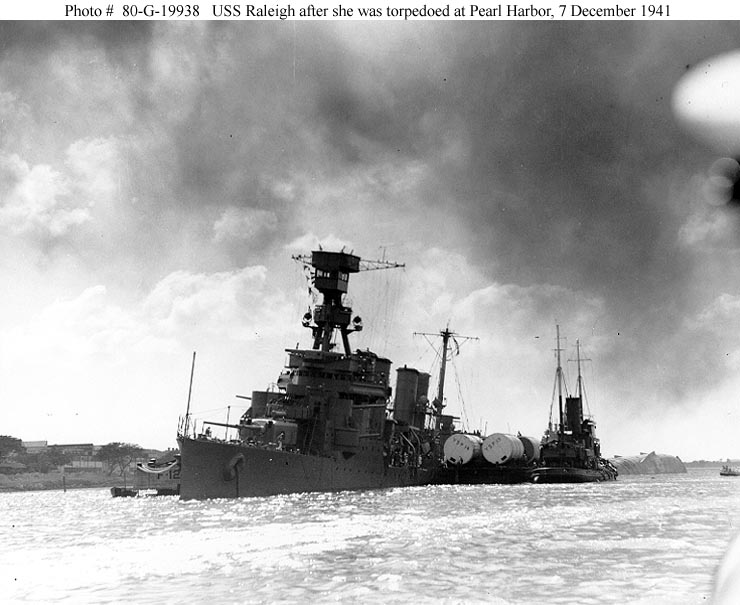
A warm Sunday morning; about 7:45 a.m. to 8 a.m. Church bells, laughter a day of peace and rest. My dad, A.C. Weatherly Jr. is shaving and about to step ashore but on this day that would not happen. Klaxons Sounded, Squawk Box Screamed, Air Raid Pearl Harbor, December 7, 1941.

A crash of steel upon steel, ripped, screaming from forces not meant to be; Main deck, deck plates, deck after deck and into the mud below. A deafening Roar as the torpedo detonates. The hull rises, falls and lists. USS Raleigh (CL-7) became an early casualty at Pearl Harbor that Day. Round One.

Damage control underway. Gaping holes and torn seams shored for now. Then, impact Two… this time horizontal as the an armor piercing bomb slams through bulkheads. Some survivors there but below decks, not a pretty site. The fight goes on.

Retrospective- Courageous acts by officers and men saved most souls on board. She was kept afloat by jettisoning everything not permanently attached; barges supported, pumps counter-flooded and breaches were shored. Raleigh made it and survived for the duration. Just one ship that day out of many. Our Navy’s greatest loss for a time. Life and Fight go on.
________________________________________________
After that we were honored to have dad home again.
Peace is won through strength.

Vigilance must never fail. Thanks to that Greatest Generation, so few now but always honored and yet we pay tribute and go on to fight our wars and win the peace for future generations.

Link below is Raleigh in 1942, ready for action:

http://commons.wikimedia.org/wiki/File:USS_Raleigh_%28CL-7%29_July_1942.jpg
USS Raleigh (CL-7) July 1942

5 Comments

July 2, 2011 · 6:39 pm