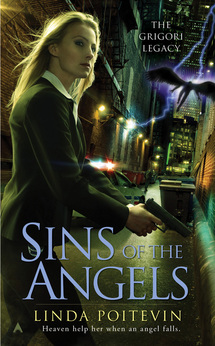
Book Review– SINS OF THE ANGELS: The Grigori Legacy

Five Stars to SINS OF THE ANGELS: The Grigori Legacy
by Linda Poitevin

Spectacular Debut Urban Fantasy

A detective with a secret lineage. 
An undercover Hunter with a bullet-proof soul. 
And a world made to pay for the sins of an angel… 

When SINS OF THE ANGELS: The Grigori Legacy hit the book shelves in September 2011, it did so as resounding success with  stellar reviews by the literary community, and with good reason.

Linda Poitevin’s debut urban fantasy novel will grab you and take you on a thrilling, page turning ride. The story opens with Homicide Detective Alexandra Jarvis caught up in the most challenging case of her career.  The story begins right after the retirement of her long time partner. Her investigation seems to be one step behind a bloody, serial killer who destroys his victims while leaving no evidence behind. Her work is troubled by flashbacks which lead her to question her own sanity.  It is a compelling and intense story, delivered using a clear methodical approach.

Detective Jarvis’s new partner Aramael, who she knows a Trent, appears to be a newbie detective. He is in fact an angelic Power—one who hunts Fallen Angels. This time, the fallen angel is his brother who just happens to be the serial killer. When Jarvis and Trent meet, sparks fly. As the story unfolds, the pair struggle to find common ground. We learn he has been sent to protect her and this task is made more difficult as he begins to have feelings for her. At stake: stopping a fallen-angel, hell bent on triggering the apocalypse.

The author’s descriptions pull the reader into the inner workings of a police crime unit, and take us behind the scenes with a host of angelic beings. Character development is exceptional. Suspense, action and dialog are brilliant. Read SINS OF THE ANGELS, by Linda Poitevin. You’ll be glad you did.

Links:
For author’s page for background, updates and purchase information,  Click Here 
Trailer 

5 Comments

Filed under Book Review

Autism Follow-up: Wandering and Other Dangerous Behaviors in Autism

I’m honored by the return of Bobbi Sheahan and Dr. DeOrnellas. In this post they have agreed to share insights into  behavioral risks associated with Autism.

Wandering and Other Dangerous Behaviors in Autism

By Bobbi Sheahan and Kathy DeOrnellas, Ph.D.

Thanks you, Rich, for having us on your blog!  We are back for part 2.  Our first segment was an introduction to autism. In Part 2, we are going to discuss some dangerous behaviors that are often part and parcel of raising a child on the autism spectrum.  Many of these are things I (Bobbi) would never have imagined before having an autistic child, and I have a pretty good imagination.

We’ll start with one of the more alarming behaviors sometimes exhibited by children with autism:  wandering or running.  We expect toddlers to take a run, if you will, at running away from Mom or Dad.  When a child has autism, that phase can go on for year after hair-raising year.

One mom, let’s call her Oona – has an elementary-school-aged son who has given her more than a run for her money:

“He would run out the door, in the street, thru parking lots, down the block, away, away, away. We had to install key-to-key deadbolts & flip-locks on all of our doors. We got handicap parking tags so we could park right next to the door. And sometimes I made him wear a strap from my wrist to his or from the shopping cart or stroller to his wrist. It was horrible & terrifying having to always be worried that someone forgot to lock a lock & he could be two blocks away at any time. On top of the running, he had absolutely no fear/safety boundaries. He would run into traffic or stop & talk to *anyone* telling them within minutes that they were his best friend & he loved them. Very scary stuff.”

I can relate to the Extreme Locks – I have had friends actually laugh at our locks and alarms, and the one on our front door actually once foiled a burglar (!), but Oona risked the scorn of the community – and certain members of her extended family — by taking the Next Step and using a leash.  I asked her how that was received. She said:

“I never got a ton of questions, usually just the sideways looks. Right after diagnosis, I was happy to volunteer answers to the looks – “he has an autism disorder, he runs away”. Later, I just stopped caring what people thought. I don’t have the time or the patience any longer to explain to everyone that I’m not a horrible parent.  I did get comments from my family (who do not understand his diagnosis & what it means for him, or care to educate themselves) like “a leash?!” or the ever popular & interchangeable, “Bring him to my house, I’ll straighten him out” & “you just need to spank him more” (typically said much more crudely by my mother-in-law as “beat his a**” – lovely).

Stories like this make me less likely to judge.  I certainly did judge myself a lot when my own child showed tendencies to flee.  My daughter’s running phase lasted for four years.  Four. Long. Years.  I remember vividly the day that she stood transfixed, staring at an open gate, repeating the cautions I’d been saying to her for years.  I admit it – I cried.  For joy, for relief, and for finally being able to laugh about the time she escaped on a tricycle and took years off the end of my life.

But wandering is no laughing matter.  According to multiple press and online reports, one father in Canada experienced the nightmare of having his nine-year-old daughter wander from their fenced yard, only to be found some hours later in a neighbor’s yard; authorities subsequently took the girl from her father’s custody based on this incident, according to this source http://www.autismkey.com/child-with-autism-taken-by-authorities-ayn-van-dyk/ and scores of others like it online.

What Can We Do About Running?  It took our family several years to instill the “do not run away” message, and it will take some folks even longer.  What can parents do in the meantime?  Besides the aforementioned locks and other physical protections, some families employ personal GPS monitors or autism service dogs who are trained to stay with the children and whose leashes are also snugly attached to the child’s wrists.  The question of why our kids wander is a tough one and beyond the scope of this article, but some folks say that the service dogs may also alleviate some of the anxiety that leads to wandering.

Police departments in the U.S. also have free biometric registries where you can provide your child’s fingerprints, pictures, and some basic information.  Many of us also have medical alert bracelets for our kids.  Special Education classrooms often have an aide dedicated to watching the doors, and I spoke with one mom who rejected an otherwise good school solely on the grounds that the front door opened up onto a busy parking lot and an even busier street.

The National Autism Association has a wonderful twelve-point list of action items to address safety concerns.  The list, which can be found in its entirety here, http://www.autismsafety.org/prevention.php?way=12  , includes several of the items mentioned here, plus some others such as designating an Adult In Charge at gatherings so that it’s clear that someone is watching our kids.

Wandering isn’t the only danger that our kids can get into. Jenny Herman, who is the Social Media coordinator for Home Educating Family and blogger extraordinaire at www.manyhatsmommy.com, tells the story of her son’s penchant for underdressing:

“The other day Josh and a friend left the apartment ahead of another mom and I. They went down the hall and out the door. They were waiting next to the friend’s van, but Josh was in shorts and NO SHOES in 30-something degree weather!”

Jenny also had a lot to say about property damage, inflicted with objects that could also be dangerous to life and limb:

“Josh has an obsession with using a tack (push pin, whatever you want to call it) to dig in the wall. He has many dime-sized holes around his room. In this incident, I came in to check on him, and he was digging at the wall next to the night light with a tack to “let more light into your room, Mommy.” At that point, he had only taken off the white paint and you could see the brown covering of the sheet rock (or whatever it is).

This FOOLISH mommy did not cover up the spot. Six weeks later, he came out to tell me he was having a hard time sleeping. Then he told me his body just had to carve something. I went into his room, and there was sheet rock dust all over the wall, the night light, his radio, and the floor. His toy screwdriver was on the floor. He had used his toy screwdriver to dig THROUGH the wall, a Real Live Hole in the Wall, as in you could see the dark space in between the walls. I said, “What did you use to dig that hole?”

“A piece of glass.”

“GLASS! What glass?” trying not to jump out of my skin.

“The glass that was by the ladder.”

“Where is it?”

“I put it in the hole.”

He had no cuts or blood, so I think he found a piece of plastic that looked like glass. I covered the hole w/paper and masking tape and amazingly nothing more has happened there. However, he cannot leave the wall alone! I’ve found other small spots…

Jenny also shared this photo with me – which I hasten to add does not reflect any physical injuries to her son –but I won’t even ruin it by attempting to caption it. It’s already well over a thousand words, I figure:

The lack of caution that we see in some kids definitely extends to safety concerns around water.  Erin McMinn Nieman, in her blog called Noah’s ARC, tells the harrowing story of her son’s close call in “Mothers’ Day Under the Sea,”  http://www.noahs-arc.com/archives/972   Her story of her son’s plunge into a murky lake and her quick rescue of him is harrowing, but what really resonated with me was his response to being saved from drowning:  “Noah walked happily on, holding my hand as if nothing had happened.”

These stories highlight the importance of safeguarding our children.  While these stories may be amusing to someone who did not experience them, our children are in significant danger and have a much higher risk of engaging in dangerous behaviors that result in an injury.  They are more likely to suffer head injuries and to poison themselves accidentally; they are also more likely to end up in hospital emergency rooms.

This is true for several reasons. Many children on the spectrum do not experience pain the way the rest of us do and, rather than learning that the stove is hot on the first trial, they touch the stove again and again.  They also do not understand that certain situations are dangerous.  For example, our children may not understand that running out into traffic can result in injury or death; rather, they are focused on escaping an uncomfortable situation.

While all children are impulsive at times, children on the spectrum are especially so and do not think through the consequences of their behaviors. As a result, they can end up in some precarious situations. Although keeping our children safe can be very difficult, it is critical. I suggest that in any situation you have a “designated watcher” for your child – someone who is responsible for seeing that he or she remains safe. This is especially important in crowds, unfamiliar settings, or anywhere your child feels uncomfortable.

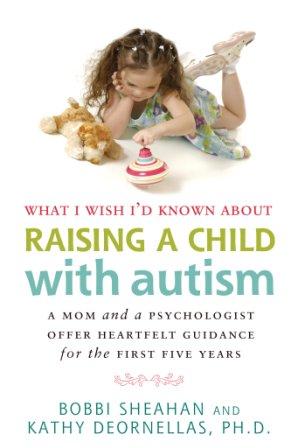
Bobbi Sheahan and Kathy DeOrnellas, Ph.D. are the authors of What I Wish I’d Known About Raising a Child With Autism; A Mom and a Therapist Offer Heartfelt Guidance for the First Five Years (Future Horizons, 2011).   Portions of this article are excerpted and adapted from the book, which is available at www.fhautism.com and wherever books are sold.   Readers of this blog can use the promotional code BOBBI for 15% off of What I Wish I’d Known About Raising a Child With Autism  and any other Future Horizons product or conference, plus free shipping.  Bobbi’s website is www.bobbisheahan.com, and she would love to hear from you at me@bobbisheahan.com.  You can also connect with her on Twitter at  @BobbiSheahan or on Facebook.

12 Comments

Filed under Autism

Autism 101: What The Rest of Us Need to Know

I want to take this opportunity to welcome Bobbi Sheahan and Kathy DeOrnellas, Ph.D. to present a carefully prepared introduction on autism for the rest of us. This should come as a welcomed post to my followers, many of whom take an active interest in Autism Spectrum Disorder and Asperger. This is a cause I have taken an active interest in for several months. I consider this to be a special presentation.

Thank you for sharing Bobbie and Dr. DeOrnellas!

Autism 101:  What The Rest of Us Need to Know

By Bobbi Sheahan and Kathy DeOrnellas, Ph.D.

Thank you so much, Rich Weatherly, for asking us to guest post on your blog!  My name is Bobbi Sheahan, and I appreciate the opportunity to talk to your readers about autism.

Ten years ago, when I got married, I knew next to nothing about autism.   Sure, I’d seen Rainman, but I’d never met someone with autism.  Well, that’s not exactly true, but I didn’t know it at the time.  You see, ten years ago, as I mentioned, I was getting married to my dear husband who is, as it turns out, on the autism spectrum.  His Asperger traits are a huge part of what makes him a wonderful husband and a successful engineer, but I’m getting ahead of myself.

My husband wasn’t the one who introduced my family to autism.  Two other people did that:  our daughter, who is also on the spectrum, and Dr. Kathy DeOrnellas.  Since I can’t bring each of you to her to hear Dr. DeOrnellas speak – and I would if I could —  I’m bringing her to you.   I’ll let her have the floor for a while now, so that she can explain to you some basic definitions about autism.

Autism spectrum disorders (ASDs), or Pervasive Developmental Disorders, are the fastest growing class of developmental disabilities in the United States and currently affect over 1.5 million Americans (Autism Society of America [ASA], 2009). In 2007, the Centers for Disease Control and Prevention determined that the prevalence of autism is currently 1 in every 94 for boys and 1 in 150 for all American children (ASA). More recent studies have placed the numbers as high as 1 in 91 children overall, and 1 in 58 boys.  This phenomenon has been widely discussed on television and in the press (Cowley, 2003).

Despite the vast amount of research being conducted each year, there are many different theories and a lot of disagreement on this topic, and it seems that each week brings news of breakthroughs in our understanding.  I do believe that there will be clear and widespread understanding of what causes autism in the foreseeable future.  Causation of autism isn’t what we’re here to explain today, though.  Today, we’re here to explain a bit about what autism is – and what it isn’t.

It’s important that we understand more about autism because it impacts all of us.  Almost everyone knows someone with autism, and it has an enormous impact on families, school systems, and communities.   Whether you’re trying to understand your nephew or a child in your daughter’s class or you’re a businessperson trying to understand how to accommodate people with autism, autism touches your life – or it will soon.  The economic impact of autism – which I use because it demonstrates how impactful autism is to families and communities, and money is easy to quantify — is now just beginning to be well-understood as well.   The Autism Society of America estimates that it costs 3.5 to 5 million dollars to care for a child with autism over his lifetime; the United States spends almost $90 billion each year for autism. This figure includes research, health care, education, housing, transportation, etc.

It has been 70 years since Kanner first wrote about children with autism and Asperger wrote about children with a higher functioning form of autism. In that time, we have learned a great deal; however, we still have far to go.

Much attention is currently being given to “Aspies” in popular culture.  There are several current television shows with characters who are supposed to represent various autistic traits – with varying degrees of accuracy and dignity.

Diagnosis of Autism Spectrum Disorders

 ASDs, also known as Pervasive Developmental Disorders, are diagnosed by comparing a child’s behavior (or the behavior of an individual at any age) to a set of symptoms that have been established as the diagnostic criteria.

Autism Spectrum Disorders (ASDs) fall under the umbrella known as Pervasive Developmental Disorders. Several types of ASDs have been identified, and it is most helpful to think of them as falling on a continuum.

In the United States, the Diagnostic and Statistical Manual of Mental Disorders-Fourth Edition-Text Revision (DSM-IV-TR; American Psychiatric Association, 2000) is the most widely used set of symptoms. The DSM-IV-TR is a sort of encyclopedia of mental health disorders. Psychiatrists write the DSM-IV-TR and use a medical model for interpreting behavioral symptoms of mental health problems. It is important to know that this is the fourth edition of the Diagnostic and Statistical Manual of Mental Disorders and the diagnosis of autism has been handled differently in each edition. As we learn more about a disorder, changes are made in the diagnostic criteria.  The new diagnosis book, the DSM-V, is scheduled to be released in 2013, and it may bring substantial changes that will probably result in a narrowing of the diagnostic criteria and the number of people receiving a diagnosis of autism under the DSM-V.  Outside the U.S., the ICD-10, the tenth edition of the International Classification of Diseases, which is published by the World Health Organization, is used. Since autism is diagnosed in individuals all over the world, it is important to recognize that the DSM-IV-TR is not the only tool used for diagnosing individuals.

 What Autism is – and what it isn’t

Autism is at one end of the continuum and is the most severe type of ASD. Children with autism have unusual behaviors that are repetitive and stereotypical, as well as very restricted interests and activities. They have severely disordered verbal and nonverbal language and as many as half never develop any type of language. Autism is also characterized by impairments in social interaction that include poor eye-to-eye gaze, lack of social or emotional turn-taking, and a failure to develop relationships with peers.  Most children with autism also have delayed intellectual abilities (DSM-IV-TR, 2000).

On the other end of the autism spectrum or continuum, children with Asperger’s Disorder generally have age-appropriate expressive and receptive language skills and average intelligence or above. They have difficulty using and understanding nonverbal behaviors, however, and their pragmatic language skills are typically impaired. As a result, social interactions are quite difficult. Children with Asperger’s Disorder typically have an overwhelming preoccupation with one or more topics (i.e., dinosaurs, skyscrapers, Egyptology, etc.) and are inflexibly bound by routine. They may have stereotyped mannerisms and/or a persistent preoccupation with parts of objects. This form of ASD also appears more frequently in males (DSM-IV-TR, 2000).

Other forms of autism include Rett’s Disorder, Childhood Disintegrative Disorder, and Pervasive Developmental Disorder Not Otherwise Specified. The diagnosis Pervasive Developmental Disorder Not Otherwise Specified (PDD NOS) is given to those children who have some symptoms of an ASD, but not enough for a full diagnosis. The diagnosis of PDD NOS, also known as atypical autism, is used when children have unusual symptoms or when their symptoms become apparent at a later age than is typical (DSM-IV-TR, 2000).  If you’re picturing a spectrum, PDD NOS is in the middle.

Much of the literature and discussion about autism deals with children with autism.  It is good that people are starting to pay more attention to adults on the autism spectrum too.  Although many people do change over time or improve in some ways – sometimes substantially – autism isn’t something that you outgrow.  Adolescents and adults have ASD and it affects their lives just as much as it can for children.

As you can see, Dr. DeOrnellas has helped me to understand quite a bit about autism.

This is the first of a two-part series.  In our next article, we will talk about safety concerns and introduce you to some of the more dangerous behaviors associated with autism.

References:

American Psychiatric Association. (2000). Diagnostic and statistical manual of mental

disorders (4th ed., text rev.). Washington, DC: Author.

Autism Society of America. (2009). Autism facts. Retrieved March 20, 2009 from

http://www.autism-society.org/site/PageServer?pagename=about_home

Cowley, G. (2003, September 8). Girls, boys, and autism. Newsweek, 42-50.

Bobbi Sheahan and Kathy DeOrnellas, Ph.D. are the authors of What I Wish I’d Known About Raising a Child With Autism; A Mom and a Therapist Offer Heartfelt Guidance for the First Five Years (Future Horizons, 2011).   Portions of this article are excerpted and adapted from Chapters 1 and 2 of the book, which is available at www.fhautism.com and wherever books are sold.   Readers of this blog can use the promotional code BOBBI for 15% off of of What I Wish I’d Known About Raising a Child With Autism  and any other Future Horizons product or conference, plus free shipping.  Bobbi’s website is www.bobbisheahan.com, and she would love to hear from you at me@bobbisheahan.com.  You can also connect with her on Twitter at  @BobbiSheahan or on Facebook.

19 Comments

Filed under Autism, Understanding Autism

Book Review – The four letters of love

The four letters of love

by Nadina Boun

Valentine’s Day Special

What a pleasure it was to receive an advance copy of Nadina Boun’s latest book, The four letters of love. It is a book I’m pleased to recommend.  In it you will be given a  sweeping panoramic vision of love from its lofty emotional heights to more introspective examinations of love in all its forms. It can be seen as a metaphor for a dream, an analogy, description or comparison. Have you ever been disillusioned? If so, this book might help restore your faith in love as an inspirational source for good. Has your mind tried to comprehend all the aspects of love? If so, expect to find new ways to look at the subject.

I’m confident the author’s work will move you and touch your soul. It will challenge, enlighten and inspire you. It is a fitting tribute to a poet who has taken the subject seriously.

I highly recommend this book to readers for multiple reasons. Love is as complex as it is dynamic. It affects every aspect of our being. The four letters of love is a collection of works which includes poems, quotes and stories all focused on this magic word, Love.

Amazon purchase Link Here

For more information on The four letters of love please check out the links provided below:

The four letters of love video trailer

Goodreads Page has an entry form for a free book giveaway.

Nadina Boun’s websites:

http://nadinaboun.wordpress.com/

http://interviewsbynadina.wordpress.com/

Love for Arts

Image via Wikipedia

15 Comments

Filed under Love, Poetry

Book Review – The World According to August by Sandy Westendorf

The World According to August – One Good Friend” opens with an effective statement of purpose; what it is and what it is not.

The book touched me deeply. It gives readers a deeply personal, yet insightful picture of a child with autism; how he and they are similar in many ways and yet different, as well.

It is the intent of the author to dispel common misconceptions about autistic children. The author uses a true story to illustrate the common, shared emotions that we all experience. We learn of concerns and needs they experience. This is a moving, touching and emotional read.

Quotation from the book.

Author

“Every child is unique; the extent to which they are affected is also individual. If you are not living with autism, it is easy to miss the child and only see the diagnosis. The book was written in an attempt to demonstrate, although outwardly, these children may appear different; but inside—where it counts—they are the same as you or me. Children with autism love, have an ego, feelings which can be hurt, a sense of humour, and even a mischievous side.

The book was written in an attempt to demonstrate, although outwardly,
these children may appear different; but inside—where it counts—they
are the same as you or me.Children with autism love, have an ego,
feelings which can be hurt, a sense of humour, and even a mischievous side.”

§

Comments and order information:

Print quality is good. Illustrations are effective and well done. I highly recommend it to everyone.

If you’re interested in purchasing, Click here “The World According to August.”

Use this link for the Kindle version of “The World According to August.”

I want to follow this review with a poem thatwas inspired by the book:

Poem for an Autistic Child

A Tribute to August

from “The World According to August —

To soar on wings of eagles

to glide along the glade

to bounce and jump and whirl and twirl

to dream and search and sway.

He has so much in common

with you and me you see —

a bright and charming sweet young boy

who senses all with clarity.

To hear, to see and touch and smell,

he takes all in so well,

his self expression is unique

his feelings hard to sell.

We might whisper, he might yell

but one can never tell.

He likes himself and folks like him

and that works out quite well.

August has needs and we have ours,

life comes with give and take ―

love and comfort, peace and joy

needs all share, so we partake.

A smile, a doubt, a look askance

a wave, a nod, a sigh —

He needs hugs and love at times,

same as you and I.

He gazes on the sights nearby,

is stirred by beauty there.

A swan takes flight, a songbird sings,

if only he could fly.

Unspoken words may bite his tongue,

but thoughts within belie.

A word from Mom, a smile from Sis

unspoken things give him answers to why.

Show him love and friendship now

his joy you’ll never miss.

  Don’t ever leave just stay nearby,
he just might make you cry.

August is a special child

and August needs a friend.

August is a special child

And August is my friend.

a poem by Rich Weatherly, October 7, 2011

For more information about autism and “The World According to August – One Good Friend” by Sandy Westendorf  refer to http://purplebirch.com/books.html .

Sandy managed a team of behavioral specialists and is the mother of an autistic child. According to Sandy:

The book was written in an attempt to demonstrate, although outwardly,
these children may appear different; but inside—where it counts—they
are the same as you or me.Children with autism love, have an ego,
feelings which can be hurt, a sense of humour, and even a mischievous side.

I heartily encourage you to support research into autism by purchasing this book.  A percentage of the proceeds will be donated equally to support Canadian-American Research Consortium (Autism Research) and the International Society for Autism Research.

For more information about Sandra Westendorf, check her Purple Birch Publishing Website. For that you can click right here. 

7 Comments

Filed under Book Review, Poetry

Review of the Novel – Pentecost, a Thriller

PentecostPentecost by Joanna Penn

My rating: 5 of 5 stars

Pentecost. A Thriller. (Kindle Edition)

Readers of action adventure and suspense-thrillers will love Pentecost by Joanna Penn. Get ready for a globe hopping journey that will take you from India to Arizona with numerous stops in-between.

Morgan Sierra once served with Israel’s IDF and she knows her way around in combat. She left that life to become an academic trained at Oxford as a biblical scholar and in psychology. She and her twin sister possess what is said to be Apostle’s Stones, stones taken from the tomb of Christ after the resurrection. There are people who believe these stones give the holder great power. This leads to the kidnapping of Morgan’s sister Faye and niece Gemma.

Two powerful organizations are determined to collect all of the stones. They believe these stones were the source of astonishing events on the original Day of Pentecost in Act 2 of the New Testament. Morgan will do anything to rescue Faye and Gemma. One organization, Thanatos collects occult and religious objects and believes that if they follow Morgan she will lead them to the stones in her effort to affect a rescue.

Morgan is eventually persuaded to join forces with ARKANE against her own better judgment. It is the lesser of two evils as far as she is concerned. ARKANE does have advantages. Using powerful computers and a massive network of resources, they promise to help Morgan in her quest. ARKANE will do anything to keep Thanatos away from the stones because Thanatos will stop at nothing that gets in their way.

As the story unfolds the reader follows Morgan as she uses data gained from research to track down the remaining stones. It is a race against time and unimaginable consequences.

Joanna Penn’s Pentecost is filled with vivid images taken from holy shrines around the world. If you’re into action and fight scenes, you won’t be disappointed. Readers of historical fiction will enjoy revelations gleaned from painstaking research.

Joanna’s work has been compared to Dan Brown and Morgan Sierra to Lora Croft. I’d venture to suggest that fans of Clive Cussler will enjoy the book as well. Get a copy of Pentecost and you have a real pager turner in your hands. You will not be disappointed.

View all my reviews

7 Comments

Filed under Book Review, Thriller

Interview – S.M. Boyce, Author of The Grimoire Trilogy

The Grimoire Lichgates & Author

S.M. Boyce created a magical fantasy adventure in The Grimoire Lichgates. Her protagonist is drawn into  a world reminiscent of the creations of Tolkein, C.S. Lewis and to some degree,   J.K. Rowling. At times frightening and at other times delighting, I’m confident you will enjoy the adventure.

How long have you worked on the Grimoire concept and novels?

I’ve been working on the Grimoire trilogy since I was sixteen, so 7 years. After years of plot development, character design, and half-finished drafts, I finally wrote the complete first draft for the novel in the early summer of 2011. It was released just this past October, but even after I wrote the first draft and thought that I had finalized everything, I would think, “But oh, wait! What if I did this, and then they went here?” and I’d change something.

…it’s amazing I published this at all, really.

What triggered the idea for the Grimoire series?

The Grimoire is one of those snowballs that started years ago and just sort of pummeled out of control. If anything, it is what it is today because I just let myself daydream about it. Virtually all of my notebooks eventually become sketch pads for character designs and plot points. It’s one of those consuming ideas, and I let my mind run with it.

What is your character development process?

My characters develop in layers. First, I look at who is needed to further the story. Do I need someone to take the main character somewhere? Does someone need to get in her way, or reroute her?

After I’ve looked at the basic “why” of a character’s purpose, I get to do the fun part: make them real. I design their character around the life they would be living in the world I created. Do they have family? Are they married? What are their hobbies? While I rarely tell readers all, if any, of this, it defines who this character is and makes them real. It gives them motivation and a personality, and it helps me to define their flaws and strengths. I design their dialect, fears, loves, and more to make them a real person and not just a character.

How about world building?

This is where my overactive imagination kicks in. I take a lot of inspiration from the natural world, because Earth is actually a pretty awesome place. Then, I exaggerate it or let my mind wander with “what if…?” questions. Why shouldn’t there be a floating city in the clouds that never stays in one place? What would an underwater city look like, and how would its people act? What if there were whole worlds hidden on the other side of a gate?

What are you doing to let people know about your new novel?

I started this really fun blog  for the Grimoire books. It’s essentially an online Grimoire, with excerpts, character art, character sketches and backstory, and even short stories and deleted chapters from the novel. The adventure doesn’t have to end because you close the book, right? Check it out. Here’s the new Book Trailer

Buy your own Grimoire!

  1. Amazon
  2. Barnes & Noble
  3. Smashwords
  4. Buy a print copy from CreateSpace

I’m also giving away a ton of copies of the book. This December, I’m participating in a holiday blog hop and I’m giving away a signed copy to one lucky winner. To enter, sign up for my S.M. Boyce blog and I’ll send out the notification on December 30.

I’m also doing a slew of giveaways In January in various states through the Big American Giveaway program. Head over to bigamericangiveaway.com to sign up and get alerts for your states.

The Big American Giveaway program is a pretty neat idea…every day, different businesses will be giving away different deals in every state. Just head to their website &  sign up to get daily alerts with what’s going on in your state, and if you like something, all you have to do to enter is mess around on Twitter and Facebook for a few minutes. It’s a pretty sweet deal.

I’m giving away 1 book a day in these states:

  • California (Jan. 18, 2012)
  • Colorado (Jan. 9, 2012)
  • Connecticut (Jan. 11, 2012)
  • Florida (Jan. 12, 2012)
  • Georgia (Jan. 10, 2012)
  • Illinois (Jan. 12, 2012)
  • Indiana (Jan. 7, 2012)
  • Maryland (Jan. 9, 2012)
  • Massachusetts (Jan. 12, 2012)
  • Michigan (Jan. 10, 2012)
  • Minnesota (Jan. 8, 2012)
  • Missouri (Jan. 9, 2012)
  • New Jersey (Jan. 11, 2012)
  • New York (Jan. 18, 2012)
  • North Carolina (Jan. 6, 2012)
  • Ohio (Jan. 6, 2012)
  • Pennsylvania (Jan. 10, 2012)
  • Tennessee (Jan. 7, 2012)
  • Texas (Jan. 13, 2012)
  • Virginia (Jan. 5, 2012)
  • Washington (Jan. 10, 2012)

What’s the next step for you?

I’m working hard to write the next two books and wrap up the trilogy before I start to work on other story ideas that have been stewing in the back of my mind. I’m hoping to have both books out by next year, though I don’t know when exactly they will be ready. If you sign up for the Grimoire Blog email digest, you’ll be the first to know!


 http://Blog.TheGrimoireBooks.com/

 http://blog.smboyce.com/

 http://www.bigamericangiveaway.com/

9 Comments

Filed under Fantasy Adventure Novels

Guest Host – Autism Discussion Re-Visited

I am honored that Sandy Westendorf has agreed to continue her discussion on autism.

Author of The World According to August

She is the author of, The World According to August – One Good Friend.

Sandy’s book inspired me to write Poem for an Autistic child and has agreed to answer questions related to comments from the introduction of her book.

Interview questions

Your book, “The World According to August” touched me deeply. You give us a deeply personal, yet insightful picture of a child with autism; how he and they are similar in many ways and yet different, as well.

During our previous interview we discussed the reasons you authored The World According to August – One Good Friend.

In that interview you addressed challenges and rewards parents and children themselves faced and stressed the importance of recognizing uniqueness. We ended with you calling on others to learn more about those with disabilities.

Since then our conversations have touched on a couple of topics you feel strongly about. From this point forward, feel free to consider yourself the guest-host.

You and your family have been encouraged by a therapy that you now heartily endorse. Please don’t hesitate to step up on your soapbox. What do you have to say on this?

Correct, the therapy our son made the most significant gains on was the Lovaas Applied Behavioural Analysis therapy, commonly referred to as ABA.  This therapy was developed over forty years ago by Dr. Ivar Lovaas, a world renowned autism expert. Dr. Lovaas’s program was, at the time, the only peer reviewed, scientifically validated therapy. It uses Discreet Trial Training, where new skills are built upon in sequence and each mastered, much like constructing a brick building. The therapy includes Intensive Behavioural Intervention, which helps the child learn to manage their behaviors so they are able to focus and learn. There are many who still believe ABA is based on the use of negative reinforcements and/or the use of aversives, which is not the case. I know dozens of families who use ABA with great success, and not one has ever used aversives. They are not used in a correctly managed, modern program.

In conjunction with ABA we incorporated a play therapy called “Floortime”, which was developed by Dr. Stanley Greenspan. We saw the most gains utilizing these two programs in concert with each other. We explored several options in an effort to find the right fit, trying other diets, supplements and therapies – with little or no results. The one program which worked best for our child was the one we stuck with. It is what works best for your individual child which is the best treatment for them! Every child is unique, therefore, their responses to a treatment will be unique as well.

Parents should investigate their options, research, ask questions, and use common sense. Now we have many therapies, and diets available to families, some better than others. Sometimes it is the combination of programs or diets which  reveals the best outcome.

We discussed a controversial issue related to evidence linking vaccinations to the onset of autism. It might help others if you share what you’ve learned on the subject. Back to you…

This is a hot button issue, with many parents, not just myself.  For years the Pharmaceutical companies have been saying there is no link between vaccines and autism. I beg to differ, as do thousands of other parents, judging by the overwhelming anecdotal evidence many doctors still choose to ignore. I have heard my son’s story repeated too many times to count, by other parents of children with autism. The scenario is all too familiar, healthy, neuro-typical toddler goes to doctor to receive vaccinations (usually it is the MMR), within minutes to hours, toddler appears unresponsive (doctor’s will refer to this as an ‘infant faint’) they cannot explain why the same toddler now no longer speaks, makes eye contact, cries incessantly or in our son’s case has stopped walking.  Beginning in the early 90s the number of recommended childhood vaccines doubled! Thimerosal the preservative used (still in flu vaccines) contains over 49% mercury by weight.  Because of the known side effects of mercury poisoning, which mimic the symptoms of autism, there is now at least one version of the Thimerosal-free vaccines available.  With the huge public outcry against the Pharmaceutical companies, there were studies conducted to determine whether or not vaccines contributed to autism. The findings concluded there was no evidence to support the claims linking autism to vaccines.  Out of the 23 studies conducted, 18 of them were funded by major Pharmaceutical companies.  This appears to be a gross conflict of interest. If the studies were to find a link between autism and vaccines – what do you think the size of the class-action law suit against Pharmaceutical companies would be?  There appears to be no accountability and our children are being hurt.

Do I believe it was the vaccine which introduced autism into the life of my beautiful boy – yes! Do I believe vaccines cause all cases of autism – I don’t know, I only know what happened to my child. I have spoken to a few parents who recognized something different in their child from the moment they were born, but the majority I have had contact with have stories like ours.  Having said this, would I vaccinate my child, knowing what I know? Yes.  I would insist on single dose, no multivaliant vaccines, which are Thimerosal-free, and I would request they be spaced farther apart.  Vaccines save lives – this cannot be disputed. We just have to ask ourselves – how much is too much?

Are there any closing words you want to share at this time?

There is a glut of information out there; it is hard to know what is right for your child. For a parent who has just received the diagnosis of autism, take heart. It is not the end of the world, or the end of your child’s life – it is the beginning of a journey down a different path towards an unknown destination.  It will be rocky, and at times overwhelming, it will also be joyous and beautiful, and you will find your rhythm. Seek out organizations like FEAT (Families for Early Autism Treatment), autism support sites, etc… Don’t be afraid to advocate, strongly if the need be, for your child. You are their voice, their safe haven, and their best shot at a bright future.

.

Additional comments?

I want to thank you for giving me the opportunity to stand on my soap-box and spread the message about people with disabilities. Many do not have a voice of their own. It is up to those of us, who love and care for them, to give them that voice. Parents should know it is okay to advocate for your child, special needs or mainstream. Encourage connections with people with different abilities – it will make all the difference – to you and to them. Eight months after I had finished writing the story and it was in the hands of my book designer, I came across the following link: http://www.wretchesandjabberers.org/screening2.php I was delighted to see other like-minded people. The short clips on the link show two men with autism trying to dispel many of the misconceptions of developmental disabilities. Their message was exactly what mine is – inside we are all the same.

For more information about Sandra Westendorf, check her Purple Birch Publishing Website. For that you can click right here. 

Caveat: Always check with your personal physician or pediatrician for advice regarding vaccinations. Information provided is the opinion of the interviewee and should not be taken as medical advice.

Link to The World According to August – One Good Friend, Trailer.

13 Comments

Filed under Author Interview

A Tribute to – December 7, 1941, “A Date Which Will Live in Infamy…”

This is a re-post from earlier this year but it is most relevant now.

7 December 1941, America enters WWII

“A day which will live in Infamy!”

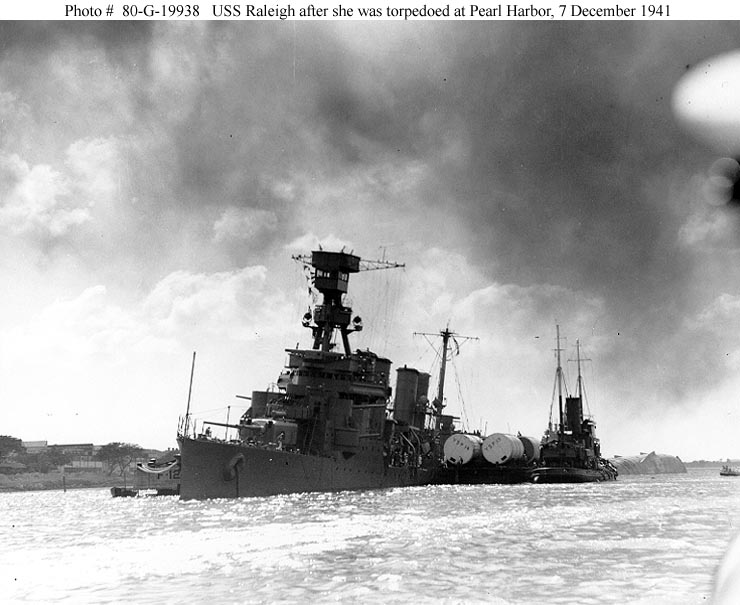
A warm Sunday morning; about 7:45 a.m. to 8 a.m. Church bells, laughter a day of peace and rest. My dad, A.C. Weatherly Jr. is shaving and about to step ashore but on this day that would not happen. Klaxons Sounded, Squawk Box Screamed, Air Raid Pearl Harbor, December 7, 1941.

A crash of steel upon steel, ripped, screaming from forces not meant to be; Main deck, deck plates, deck after deck and into the mud below. A deafening Roar as the torpedo detonates below. The hull rises, falls and lists. USS Raleigh (CL-7) became an early casualty at Pearl Harbor that Day. Round One.

Damage control underway. Gaping holes and torn seams shored for now. Then, impact Two… this time as an armor piercing bomb crashes through bulkheads and explodes a short distance beyond her hull. All survived there but below decks, not a pretty site. The fight goes on.

Retrospective- Courageous acts by officers and men saved most souls on board. She was kept afloat by jettisoning everything not permanently attached; barges supported, pumps counter-flooded and breaches were shored. Raleigh made it and survived for the duration. Just one ship that day out of many. Our Navy’s greatest loss for a time. Life and Fight go on.
________________________________________________
After that we were honored to have dad home again.
Peace is won through strength.

Vigilance must never fail. Thanks to that Greatest Generation, so few now but always honored and yet we pay tribute and go on to fight our wars and win the peace for future generations.

Link below is Raleigh in 1942, ready for action:

http://commons.wikimedia.org/wiki/File:USS_Raleigh_%28CL-7%29_July_1942.jpg
USS Raleigh (CL-7) July 1942

4 Comments

Filed under 7 Dec 1941 a Day of Infamy, Attack on Pearly Harbor

Book Review – A Man Called Outlaw

A Man Called Outlaw

A Man Called Outlaw by K.M. Weiland

My rating: 5 of 5 stars

I hope everyone enjoys a book review for a change this week. Let me know what you think!

A Man Called Outlaw features struggling settlers in the Wyoming Territory as they attempt to counter aggression by a narcissistic robber baron. Be sure to read the book description for a good synopsis. I see no need to repeat it.

The plot line alternates between the late 1850s and the late 1880s. By reading from the earlier period the reader gains insight into a mystery. The early period also contributes to the reader’s understanding of the plot and character development.

In many ways, the main character is the antagonist, Nathaniel Wilcox. He is introduced as judge and a corrupt one that that. He owns the largest ranch in the area and is determined to use every means possible to expand his property without consideration for who he hurts or how deplorable his methods become. If you are like me, you will grow to despise this slick, conniving narcissist. He lives by the Darwinian principle of survival of the fittest. He epitomizes corruption, injustice and hypocrisy.

In contrast I found myself pulling for the underdogs, those settlers attempting to survive on the fringes of Wilcox’s property. These are admirable if flawed people. The author does not present us with larger than life characters. Each has strengths and weaknesses. For me I found their constant struggles against a ruthless, powerful opponent to be quite admirable. You will grow close to several of these very realistic individuals.

Ms. Weiland weaves a good storyline with enough tension, action and fighting to keep most readers interested. Her descriptions paint vivid imagery. She knows and understands the lives of cattlemen, cowboys and their families. Her action scenes on horseback are exceptional.

Toward the end of the book important elements of the plot converge toward a resounding climax. My wish is that you read and enjoy A Man Called Outlaw as much as I did.

I highly recommend it!

View all my reviews

10 Comments

Filed under Historical Fiction